
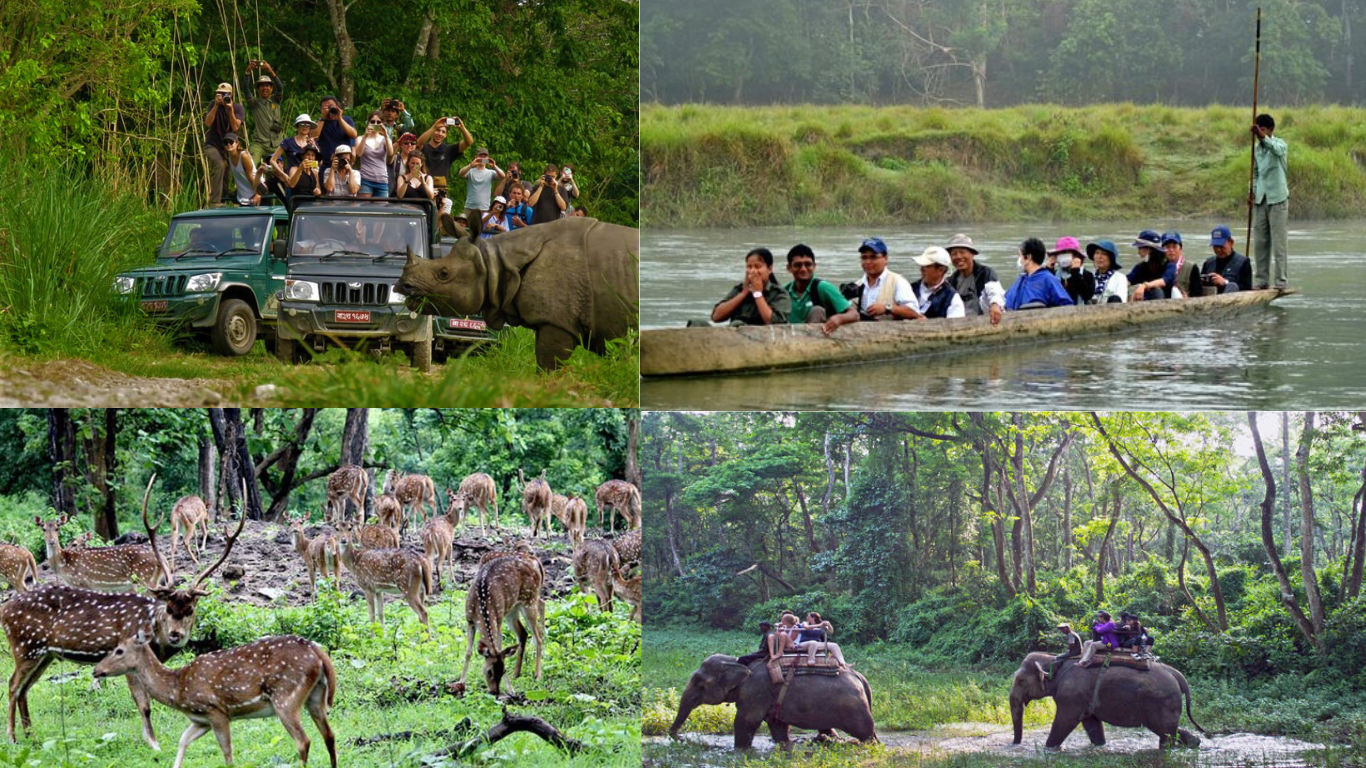
Did you know that Chitwan National Park is the first national park in Nepal and its fame is also very high. Established in 1973, this national park is internationally recognized for its excellent biodiversity, rich ecosystem, and successful wildlife conservation efforts.
It is known as one of the last strongholds of the endangered large one-horned rhinoceros and the royal Bengal tiger. The park is also home to Asian elephants, leopards, sloth bears, gaur (Indian bison), wild boars, deer species, gharials and crocodiles, and over 500+ species of birds, making it a paradise on earth for wildlife lovers and bird watchers.

This park has its own importance, but due to its community-based conservation and buffer zone management, it can be found playing its role in the conservation of the park by supporting local livelihoods. The people of this park, especially the indigenous Tharu community, whose culture, tradition and lifestyle have added a separate dimension to this area.
| Name | Chitwan National Park — Nepal’s first national park and one of the most important protected areas in the country |
| Country | Nepal |
| Province | Mainly Bagmati Province; also extends into parts of Gandaki Province (around Nawalpur ( Nawalparasi East side ) area only) |
| District | Chitwan District, Nawalpur (Nawalparasi East) District, Parsa District, Makwanpur District |
| Municipality / Rural Municipality | Areas near Ratnanagar Municipality, Rapti Municipality, Madi Municipality, Meghauli, and Sauraha (main tourism and entry zones) |
| Established | 1973 |
| UNESCO Status | UNESCO World Heritage Site (listed in 1984) |
| Total Area | Core Area: 952.63 sq. km Buffer Zone: approx. 729.37 sq. km |
| Elevation Range | From approx. 100 meters (river valleys) to 815 meters above sea level (Siwalik Hills) |
| Best Time to Visit | October – March (cooler, dry season; best for wildlife viewing) March – May: warmer but popular June – September: monsoon, least preferred |
| Border in the East | Parsa National Park (formerly Parsa Wildlife Reserve) |
| Border in the West | Narayani–Rapti River system |
| Border in the North | Narayani–Rapti River system (natural boundary with settlements) |
| Border in the South | Valmiki Tiger Reserve, Bihar, India |
Chitwan National Park Entry Fee
| SN. | National Parks/ Wildlife Reserve/ Conservation Areas | Nepali | SAARC | Foreigners | Child discount |
| National Parks that are designated UNESCO World Heritage Sites (Natural) | |||||
| 1 | Chitwan National Park | NRs. 150 per person per entry | NRs. 1,000 per person per entry | NRs. 2,000 per person per entry | Below 10 yrs free |
All types of fees mentioned here are collected and collected at the park entrance.


How to Reach Chitwan National Park
It is easy to get to Chitwan from any part of Nepal. Since the roads of this district go to places such as Kathmandu, you can easily get buses and other means to get here. We have put information here for your convenience.
By road
From Kathmandu, you can easily travel here via Muglin. You can easily get a public bus to get here from Kathmandu, while various taxis and private tourist buses are available for this purpose.
To get here, you can get a bus from the Belhiya border of Rupandehi. Similarly, buses can be easily available from all major locations including Nepalgunj, Mahendranagar, Dhangadhi, Palpa.
By air
You can travel from Kathmandu to Bharatpur Airport via domestic flights in 20-25 minutes.
From Bharatpur Airport, park entrances in places such as Sauraha or Kasara can be reached via a short road distance for Chitwan National Park.

Cultural and Heritage Sites in and Around the Park
Bikram Baba (Kasara)
One of the religious pilgrimage sites near the Kasara entrance, it is revered by both the local community in the vicinity and visitors from other places for its spiritual and traditional significance.
Valmiki Ashram (Tribeni)
Situated within the vast precincts of this park, this ashram attracts Hindu pilgrims from Nepal and India and showcases a cultural civilization that is connected to the land and rivers.
Tharu Cultural Experience
Although not within the boundaries of the park, the Tharu communities around Chitwan (especially around Sauraha, Meghauli and Tandi) offer visitors a wonderful glimpse into the local culture, along with a taste of Tharu culture (traditional dance, music, handicrafts, and home visits showcasing a heritage intertwined with nature).
Beshajar and associated lakes (Ramsar sites)
Within the buffer zone area, these wetlands have been recognized for their ecological significance under the Ramsar Convention (combining natural heritage with community conservation efforts).
Faqs for Chitwan National Park
Why is Chitwan National Park famous?
The park is famous for its rich wildlife and biodiversity. It is one of the best places in Asia to see the endangered one-horned rhinoceros, Royal Bengal tiger, Asian elephant, gharial crocodile, and over 500 species of birds.
What activities can tourists do in Chitwan National Park?
Popular activities include jeep safaris, guided jungle walks, canoe rides, bird watching, nature walks, and cultural programs showcasing Tharu traditions.
Is Chitwan National Park suitable for family travel?
Yes, Chitwan National Park is suitable for families. Many resorts offer family-friendly accommodations and guided activities with safety measures in place.
Conclusion
If you have not visited this area, then you must visit it. The joy of nature and the cultural mystery here are very important in themselves. When coming here, A trip to the forest with jeep or elefant with help is very enjoyable. It is one of the best places for people who want to enjoy nature. I find that even when the outside world is very stressful, going to the park itself makes you feel calm. Chitwan National Park offers visitors an unforgettable experience of Nepal’s wildlife, nature, and living heritage, along with its beauty.